
Get 10% off at ZAYA.ua! Enter the promo code NATURCOMB at checkout! P.S. The promo code is valid for all products except those already discounted.
Comb – it is a hair care tool that we use daily. But how often do we consider the impact that the brush has on the hair and scalp?
The wrong comb and neglect of the rules can seriously injure the hair. And vice versa - a high-quality comb can become an effective tool in a beauty routine. Tips and information on the types and possibilities of combs for different needs are further in the text.
What is the difference between combs?
Combs differ in shape, material and purpose. This means that in order to choose the perfect comb for you, you need to consider these 3 factors.
Material
Any material has its advantages and disadvantages. After reading the information below, consider what exactly your hair needs and what features may require special attention. This way you can choose the right material for your comb.
- Tree. The most popular material among specialists, because wood has a minimal effect on hair. A significant disadvantage of such scallops is the need to regularly clean and wash them.
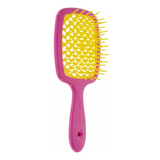
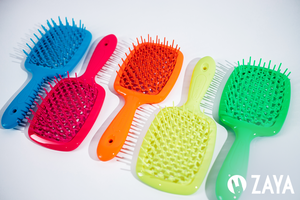
- Plastic. Being the most budgetary material, it also has its drawbacks. Approach the choice of plastic combs carefully, because some types of material can electrify and damage the hair. At the same time, developments also do not stand still, so if your favorite and familiar — it is plastic, we suggest choosing a better and healthier option. A line of brushes from the brand Janeke, namely Superbrush offers effective hair care without trauma.
- Silicone. The newest comb material on this list and a worthy alternative to plastic. Silicone combs have an affordable price, at the same time they do not electrify or damage the hair. But owners of very thick or tangled hair should take into account the thickness and hardness of the teeth when choosing a silicone comb.
- Metal. These combs are very durable, however, among their disadvantages — negative effect on the hair. They can not only damage and tear the hair, but also injure the scalp. To avoid this, choose combs with rounded teeth. Also keep in mind that a metal comb should not be used when drying hair, because the teeth heat up, overheat the hair and in the longer term cause dryness and brittle hair.
- Carbon. Combs made of this material are not inferior to metal, and even ahead of them. Carbon is a material that has the same strength as metal, but has an antistatic effect and does not harm the hair.
- Ebonite. It is from this material that professional combs are usually made. And all thanks to its antistatic properties and durability. They are recommended for use in everyday life, and for coloring, and perm.
- Pottery. One of the best combs for maintaining healthy hair. They are absolutely safe and neutral, and are also ideal for drying and styling hair.
- Natural bristle. Surprisingly good option for everyday combing of damaged and injured hair. Natural bristles will be safe for hair and scalp, it will not pull out hair and does not electrify them.

You can also use combs that combine multiple materials. Only you or your stylist can understand how this or that combination is appropriate, because only you know all the features and needs of your hair. In any case, choose a quality manufacturer. For example, the Olivia Garden brand, which has been improving its brushes for over 60 years. In their line you can find great options for different hair and different functions: ceramic brushes for easy and harmless styling, natural bristle brushes or bamboo for damaged and weak hair, sparse tooth brushes for curly hair and care procedures.
See all Olivia Garden brand models in stock and choose your own here.
Shape
The shape of the comb is also very important. When choosing your ideal brush, think not only about the properties of the material, but also about the shape of the brush.
- Comb. This is a thin and flat comb that often has a thin section at the back for parting or parting the hair. A real must-have when cutting, coloring or bouffanting.
- Massage comb. This type is distinguished by massage balls at the end on the teeth, which gently interact with the scalp and do not injure the hair. Massage brushes that will gently care for both hair and scalp are presented by the Janeke brand. Choose the perfect brush from this brand here .
- Brushing. A cylindrical comb that has small teeth along its entire length. Used when blow-drying and creates big curls.
- Skeleton comb. Has teeth on both sides. Suitable for shaping everyday hairstyles, in particular, to add volume to the root zone of the hair.

Destination
- For straightening you can either use a straightening comb or a safety silicone comb before running the straightener through your hair.
- For curling hair, stylists use brushing. This is one of the most effective and most effective and safest ways to create beautiful curls and not harm your hair.
- To blow-dry your hair, use either brushing or a round comb. Use non-heating ebonite or wooden combs.
Using three filters: material, shape and purpose, you can see that no comb will fit all your needs. Here, as in life, there are rarely universal solutions. So if you can't find a comb that would be ideal for all situations, get two: one (flat or massage) for combing and another (brushing or skeletal) – for styling.
Brushes from Tangle Teezer, and fans of the British manufacturer around the world confirm the validity of the ambition. These are new generation combs, designed in such a way as to comb different hair as softly and efficiently as possible when drying and styling, when applying care products, and for daily use. We have already talked more about the features of these combs in this article .
Choosing your perfect brush from this brand will be easy, as each model is designed specifically for the needs and health of oily, dry, brittle, thick or damaged hair.

How to Choose a Comb for Your Hair Type: Top Tips from the Experts
Material and Shape – These are indicators that distinguish combs from each other. However, the most important factor in choosing a comb – this is your hair type.
Dry Hair. The best comb for dry or damaged hair is made from natural bristles. It will not injure the hair and electrify them. Together with the right care for dry and damaged hair, such a comb can contribute to the healing of your hair.
Greasy hair. For this type of hair, the best choice is – these are scallops made of silicone and wood.
For hair that gets tangled up silicone brushes and combs are also the best choice, who have little or no handle at all. Owners of matted hair need to remember that the smoother and rounder the teeth of the comb are, and the closer the distance from the comb to the hair, the less pain you will feel when combing and styling your hair.
For thicker hair ebonite, carbon and silicone materials are best suited. They gently but effectively comb large strands.
If your hair is falling out, try replacing your brush with a massage comb. It will gently stimulate blood circulation in the scalp, which will lead to the restoration of hair follicles. At the same time, it will not injure the hair and scalp.
For curly hair best choice — this is a comb with sparse teeth that will not hurt the hair, but instead gently detangle and shape beautiful strands of your hair.
For long hairsparse-tooth combs are also better — After all, it is precisely such combs that injure the hair less. The rule of thumb for combing long hair is to start at the ends and work your way down to the roots.
How to use a comb correctly?
An equally important factor influencing the condition of the hair is the correct use of the comb. It seems that the rules for combing hair are obvious, because we do it every day.
We have put together some non-obvious tips for you to make your hair stronger and more beautiful.
- Do not comb more than 2 times a day. It is best to do this in the morning and evening. More frequent use of the comb can lead to injury and hair loss. If you have wavy or curly hair, brush it less often if possible, this will keep curls and keep your hair healthy.
- Comb your hair when it's completely dry or just slightly damp. Combing wet hair leads to trauma and hair loss.
- To comb wet hair when applying a mask or balm, use special wet hair combs with very sparse teeth.
- Comb from tips to roots. Neglect of this rule is guaranteed to lead to more trauma to the hair, they break and split.
All you need to know about brush care
Proper care of your comb will not only prolong its life, but also improve the condition of your hair.
- Wash your comb 1-2 times a week;
- Pre-clean the comb from hair;
- The easiest way to wash your comb is with regular shampoo. After that, it must be dried;
- You can also soak the comb in hydrogen peroxide for cleaning;
- Wooden scallops are cleaned with alcohol and sponges. This material cannot be washed;
- Change your comb every 6-12 months.